Wood Fences in Reno
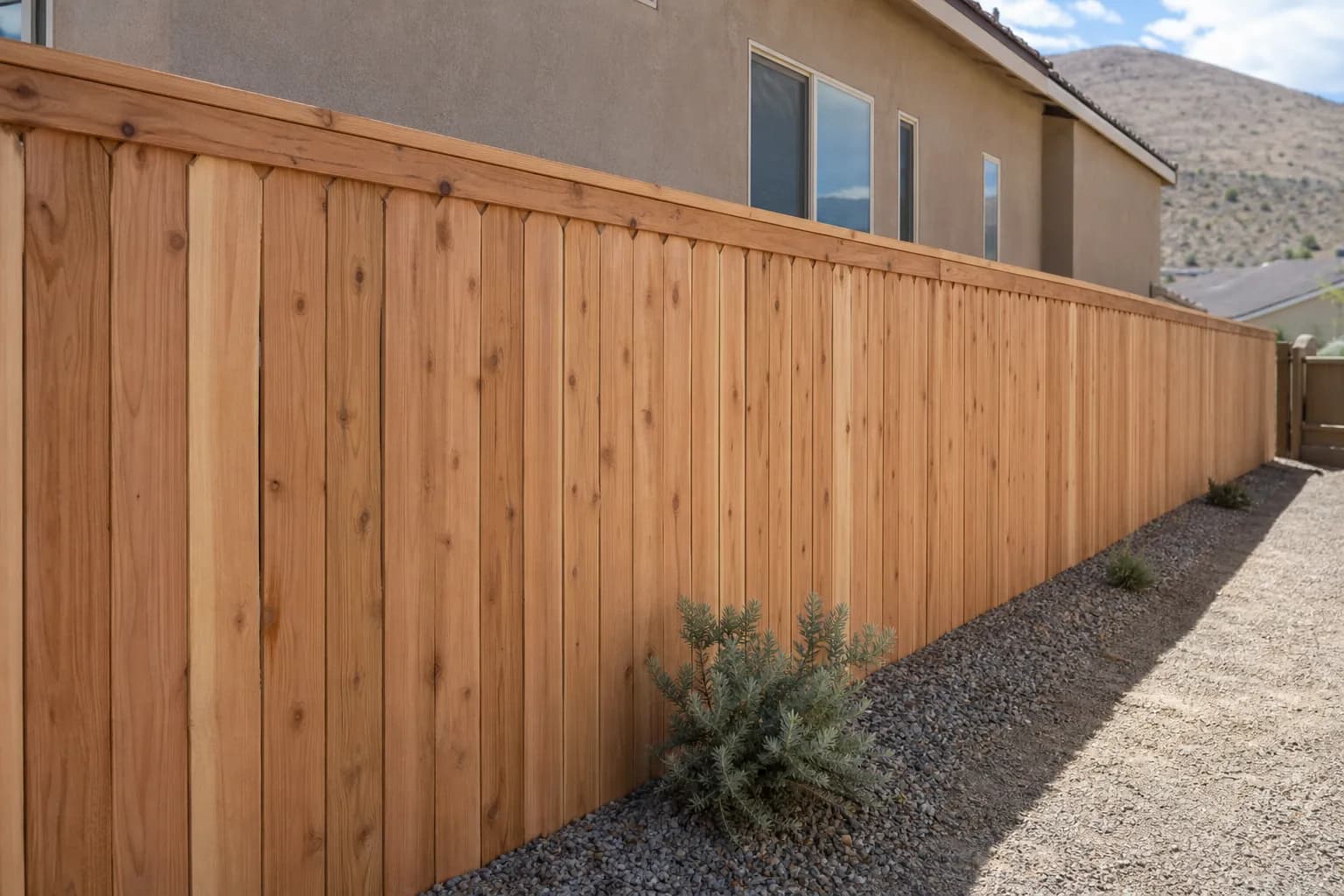
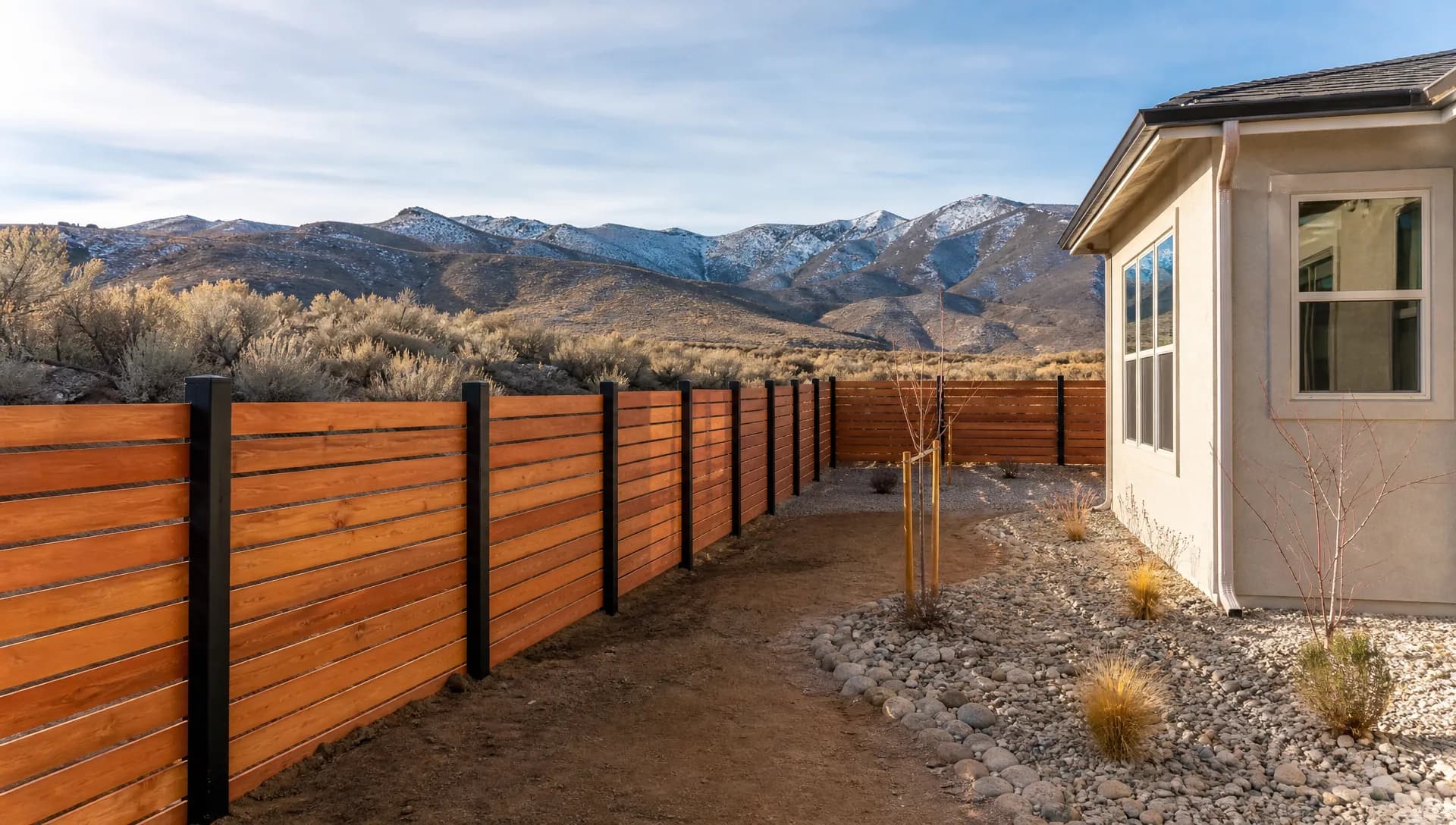
Wood is one of the fence types Reno-area homeowners search for most: a 6-foot privacy fence of dog-ear pickets on two or three rails, or a horizontal board fence on steel or wood posts. National guides put a 6-foot wood privacy fence at roughly $13–$45 per linear foot installed, with pressure-treated pine at the low end ($15–$30) and cedar near the top ($25–$45). Read the full guide to wood fence installation for post spacing, picket styles and what the high desert does to lumber.
Reno is dry for most of the year, sees about 122 days a year at or below freezing and gets afternoon west wind, the Washoe Zephyr, on many summer days. That combination checks and cups boards, loosens fasteners and works posts back and forth in the ground. A wood fence here lasts when the posts are set deep and the boards are sealed or stained on a schedule.
What to ask a wood fence contractor
- What species and grade of picket, and what post: pressure-treated wood, cedar, or galvanized steel?
- How deep will posts be set, and in concrete or compacted gravel? Washoe County's frost depth is 24 inches.
- How far apart are posts on a fence that faces the prevailing wind?
- Is removal and haul-off of the old fence in the price?
- Who pulls the permit and gets HOA sign-off, if either is needed?
Vinyl Fencing
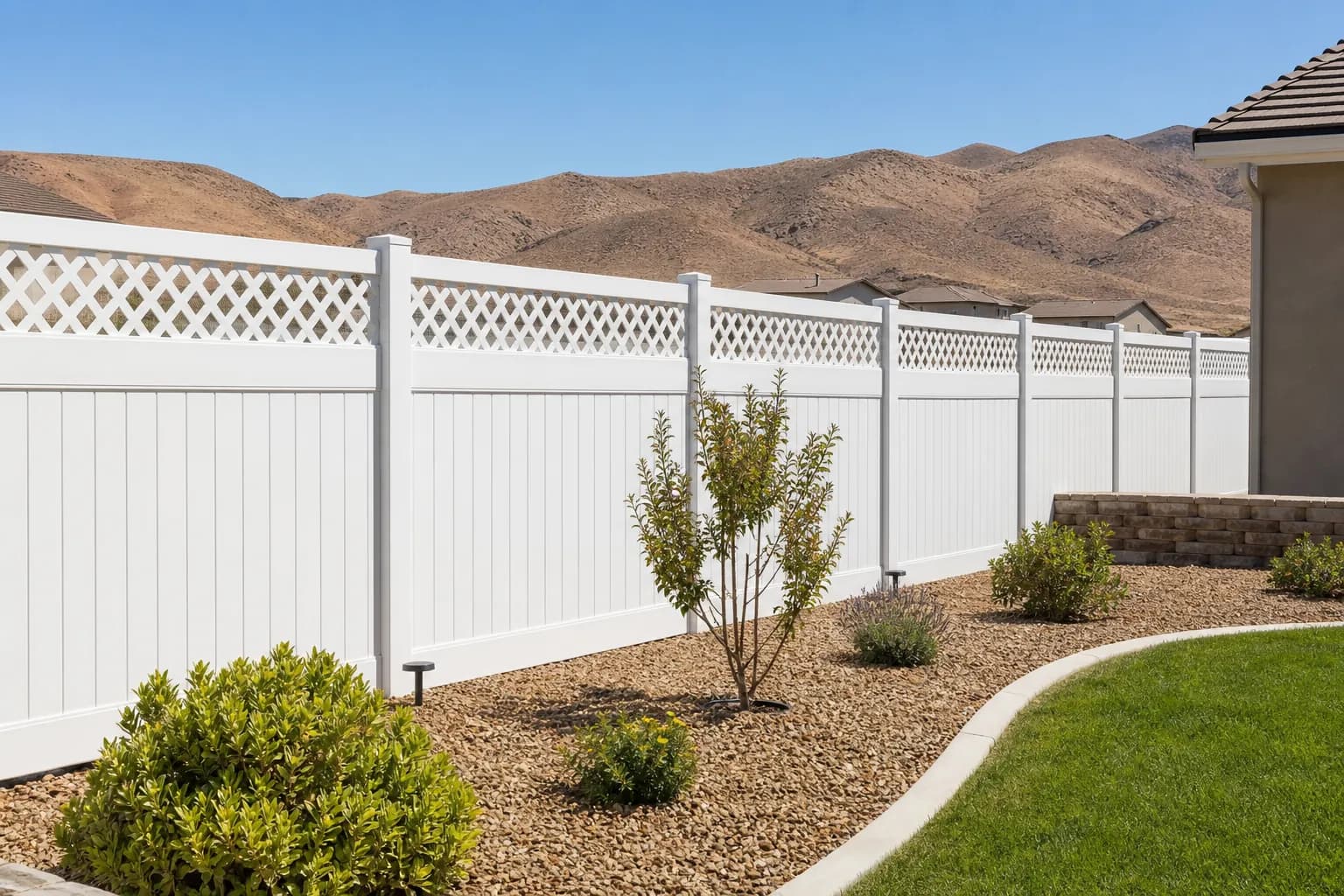
Vinyl (PVC) fence does not need paint or stain, which is its main appeal in a climate that bakes and freezes the same boards every year. National guides put 6-foot vinyl privacy fence at about $30–$60 per linear foot installed. Panels slide into routed posts, and the posts are set in concrete with aluminum or steel inserts where wind loads or gate weight call for them. See the vinyl fence guide for styles and what to ask.
Solid vinyl panels catch a lot of wind. In an area where local building design uses wind speeds of 120 mph and up, ask how the contractor reinforces posts, especially at gate openings and corners. Semi-private styles with lattice or spaced pickets let some air through.
Wrought Iron and Ornamental Steel
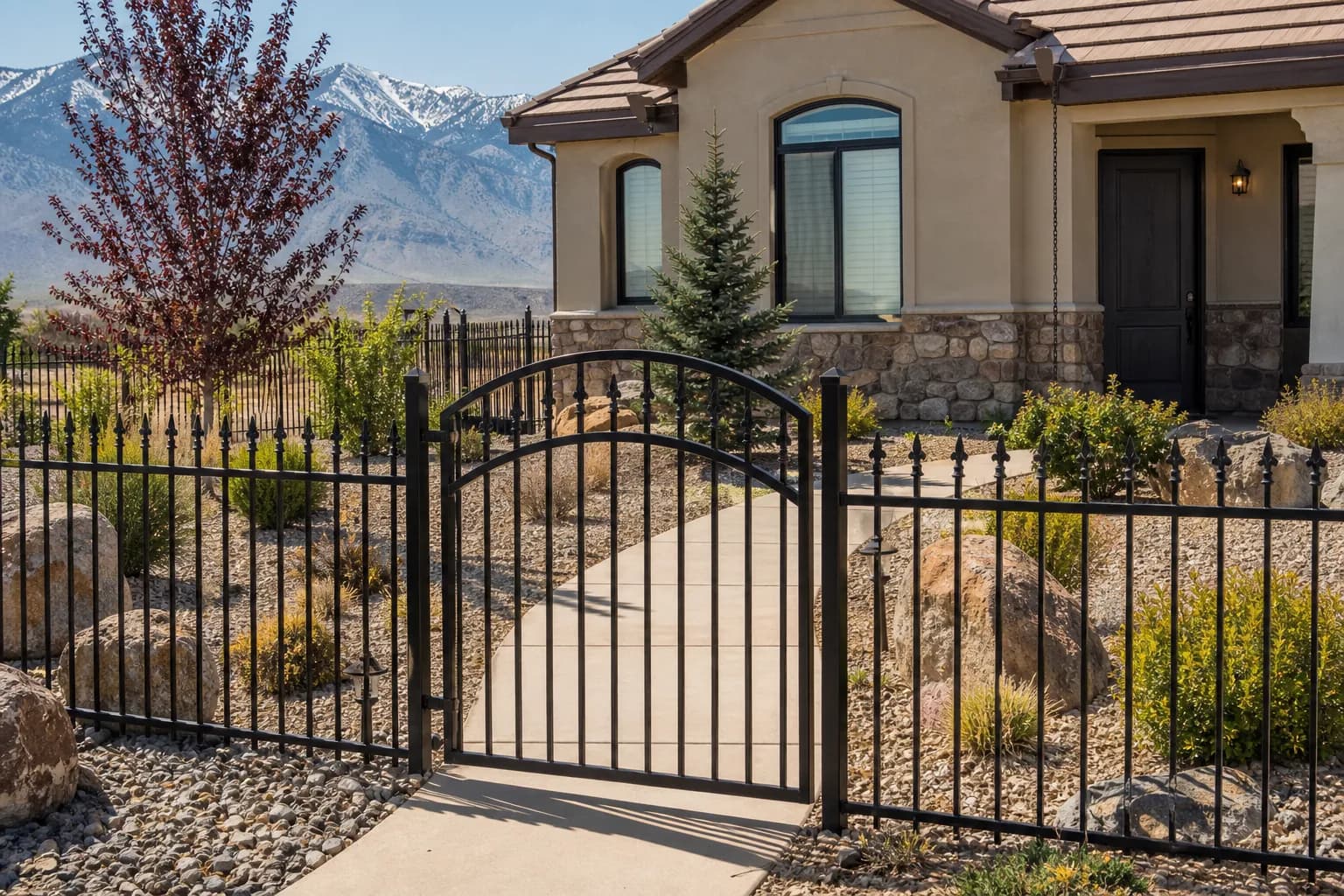
What most people call wrought iron today is welded ornamental steel: square pickets between rails, powder-coated or painted black, with spear or ball finials. It is the common choice for front yards, where the City of Reno limits fences to 4 feet in the required front yard, and for anyone who wants a view through the fence. National guides put it at roughly $30 to more than $100 per linear foot, depending on gauge, design and gates. See wrought iron fence.
Steel needs a sound finish to hold up through snow and road salt near streets. Ask whether panels are powder-coated or field-painted, how cut ends and welds are treated, and how the bottom rail clears the ground.
What a Fence Costs in Reno
We could not find a public source for Reno-specific fence prices, so these are national installed ranges. Local contractors set their own prices; use these to sanity-check a quote, not as a price.
| Fence | Typical national installed range |
|---|---|
| Wood privacy, 6 ft | $13–$45 per linear foot |
| Vinyl privacy, 6 ft | $30–$60 per linear foot |
| Aluminum | $25–$50 per linear foot |
| Wrought iron / ornamental steel | $30–$100+ per linear foot |
| Split rail (wood) | $15–$35 per linear foot |
| Driveway gate, installed | About $875–$3,823; average about $2,337 |
| Fence repair, per job | National average about $618 |
What moves a Reno quote most: total length and height, the number of corners and gates, slope, how hard the post holes are to dig, removal of an old fence, and any permit, survey or HOA review. Get two quotes on the same scope and compare them line by line.
Reno Fence Rules: Permits, Heights and Setbacks
The first question is which jurisdiction you live in. The City of Reno, the City of Sparks, unincorporated Washoe County, Carson City and Lyon County each write their own fence rules, and an address that says Reno can sit in any of the first three.
| City of Reno | Unincorporated Washoe County | City of Sparks | |
|---|---|---|---|
| Permit | Required for construction of fences and walls (RMC 18.04.809) | Not for typical residential fences within height limits; required for screening fences and pool barriers | Confirm with Sparks Building & Safety |
| Front yard | 4 ft or less in the required front yard | Up to 4½ ft in the front setback | 3 ft, or 4 ft if at least 50% open |
| Side and rear | 6 ft or less | Up to 6 ft | 6 ft or less |
| Corners and driveways | Clear vision triangle (AASHTO) | 18 in at the 30-ft corner triangle and the first 10 ft of a driveway | No fence that creates a sight issue |
Reno also measures a fence on top of a retaining wall from the top of the wall, lets residential posts stand up to 2 feet above the fence when they are at least 6 feet apart, and bars barbed wire, razor wire and electric fencing on residential property. Fences may not go in the city right-of-way or in easements without the City Engineer's written approval.
HOAs and architectural committees
Many newer subdivisions in the Reno area have an HOA with an architectural committee. Reno's plot plan checklist asks for HOA approval where it applies, and Washoe County requires an active committee to sign off before you submit. Get the HOA's material, color and height rules in writing before you pick a style.
Wind, Freeze and Caliche: Building a Fence That Stays Up
Local building design in Washoe County uses a 24-inch minimum frost depth and wind design speeds of 120 to 130 mph for ordinary structures. A tall solid fence acts like a sail, and posts that are too shallow, too far apart or set in loose soil are what fail first. Winds in Washoe Valley sometimes close US 395 to high-profile vehicles, and the Washoe Zephyr, an afternoon wind off the Sierra, is a regular part of summer here.
Digging is its own variable. Soils around Reno can include caliche, a cemented calcium-carbonate hardpan, and some low basins hold clay that swells when wet. Hitting caliche can mean a rock bar, a hydraulic auger or a core drill, which is why some contractors price difficult post holes separately. Ask how they plan to dig, and what happens if they hit rock.
Snow and elevation
Reno averages about 20.9 inches of snow a year on the valley floor, but the Carson Range foothills on the west side of town, from about 4,700 to 5,600 feet, can get two to three times that. Snow drifting against a solid fence adds load, and snow plowed onto a front fence along a street adds more. A higher lot on the west side of the valley deserves a sturdier post and rail spec than one on the valley floor.