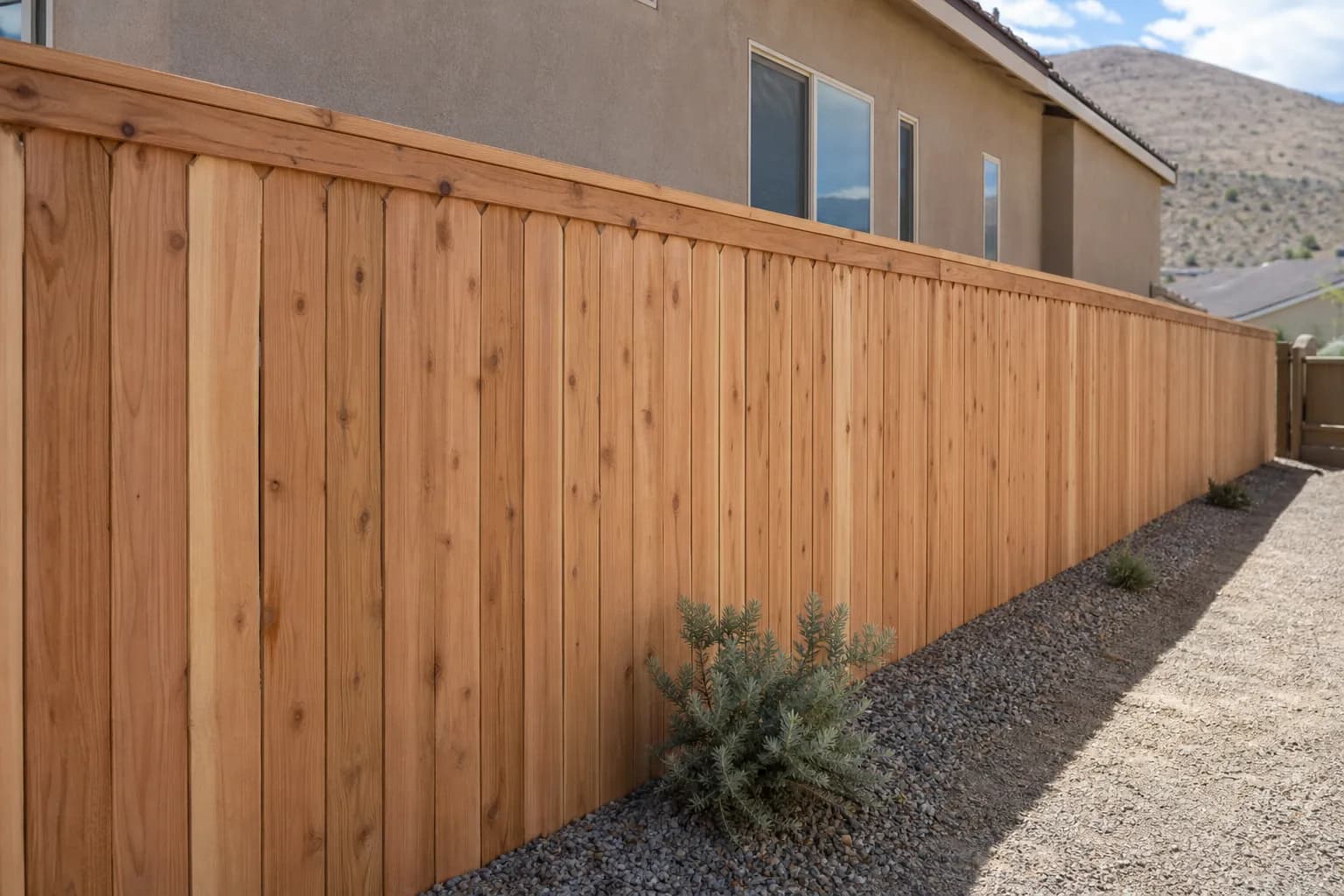
Reno Solid Fence passes wood fence requests from Reno-area homeowners to independent, NSCB-licensed fence contractors. Wood is among the most-searched fence types in the Reno market, and in a climate this dry, windy and cold, the details below decide whether it stands straight for years or leans after its second winter.
Get contractor quotes
- Request cost
- $0
- Contractors
- Independent, NSCB-licensed
- You contract with
- The contractor, directly
Common wood fence styles
Dog-ear privacy
Six-foot pickets with clipped top corners, nailed or screwed to two or three horizontal rails between posts set about 6 to 8 feet apart. It is the default backyard fence in tract neighborhoods and the least expensive full-privacy wood option.
Board-on-board and shadowbox
Overlapping pickets on one side (board-on-board) or alternating sides (shadowbox) close the gaps that open as boards shrink in dry air. Shadowbox looks the same from both sides, which helps on a shared line with a neighbor, and lets some wind through.
Horizontal and cap-and-trim
Horizontal boards on wood or steel posts read as modern, and a cap rail with trim boards finishes a traditional fence. Both use more material per foot. See the horizontal fence guide for spans and board sizes.
Lumber choices in a high-desert climate
Cedar resists rot and insects and moves less than pine as it dries, which matters in a place that averages about 7 inches of precipitation a year. Pressure-treated pine is cheaper and stronger for posts and rails but tends to check and twist more if it is not sealed. Many builds pair treated posts and rails with cedar pickets.
Sun is the bigger enemy than rot here. UV grays wood within a season or two and dries the surface fibers, so plan on a penetrating stain or sealer soon after the wood has dried out, then again every few years. Ask the contractor whether they apply it, and how long new treated lumber should dry first.
Posts: depth, spacing and wind
Posts carry the whole fence. Washoe County uses a 24-inch minimum frost depth for structures, and a post that sits above the frost line can heave as the ground freezes and thaws through Reno's roughly 122 freezing days a year. A common rule of thumb is to set a third of the post's above-ground height in the ground, which puts a 6-foot fence post about 2 to 3 feet deep.
Solid privacy fences catch the Washoe Zephyr, the afternoon west wind that can blow daily in summer. Tighter post spacing, galvanized steel posts with wood brackets, or a semi-private style all reduce the load. Ask how the contractor sets posts (concrete, or compacted gravel for drainage) and what they do at gate posts, which take the most strain.
Permits and where the fence can go
Inside the City of Reno, fence construction requires a permit, and the plot plan shows each fence segment's length, height and material, gates, property lines and HOA approval if your neighborhood has one. Fences are limited to 4 feet in the required front yard and 6 feet on side and rear lot lines. In unincorporated Washoe County, a 6-foot fence outside the front setback generally does not need a building permit, and the front setback limit is 4½ feet.
If you live in a wildland-urban interface area, Washoe County requires any part of a fence within 5 feet of the house to be noncombustible or as fire-resistive as the exterior walls. With wood, that usually means a metal or masonry section, or a metal gate, where the fence meets the house.
What a wood fence costs
National installed ranges for a 6-foot wood privacy fence run about $13–$45 per linear foot: pressure-treated pine about $15–$30 and cedar about $25–$45. Gates, removal of an old fence, slopes and hard digging add to that. The wood fence cost guide works through example lengths.
Back to the main guide: fence companies in Reno.