Reno Solid Fence connects owners of larger lots and small acreage around Reno with independent fence contractors licensed by the NSCB. Open fences that mark a line, hold horses or protect a garden follow different permit rules than a backyard privacy fence, and those rules are friendlier than most people expect.
Get contractor quotes
- Request cost
- $0
- Contractors
- Independent, NSCB-licensed
- You contract with
- The contractor, directly
Open fence types
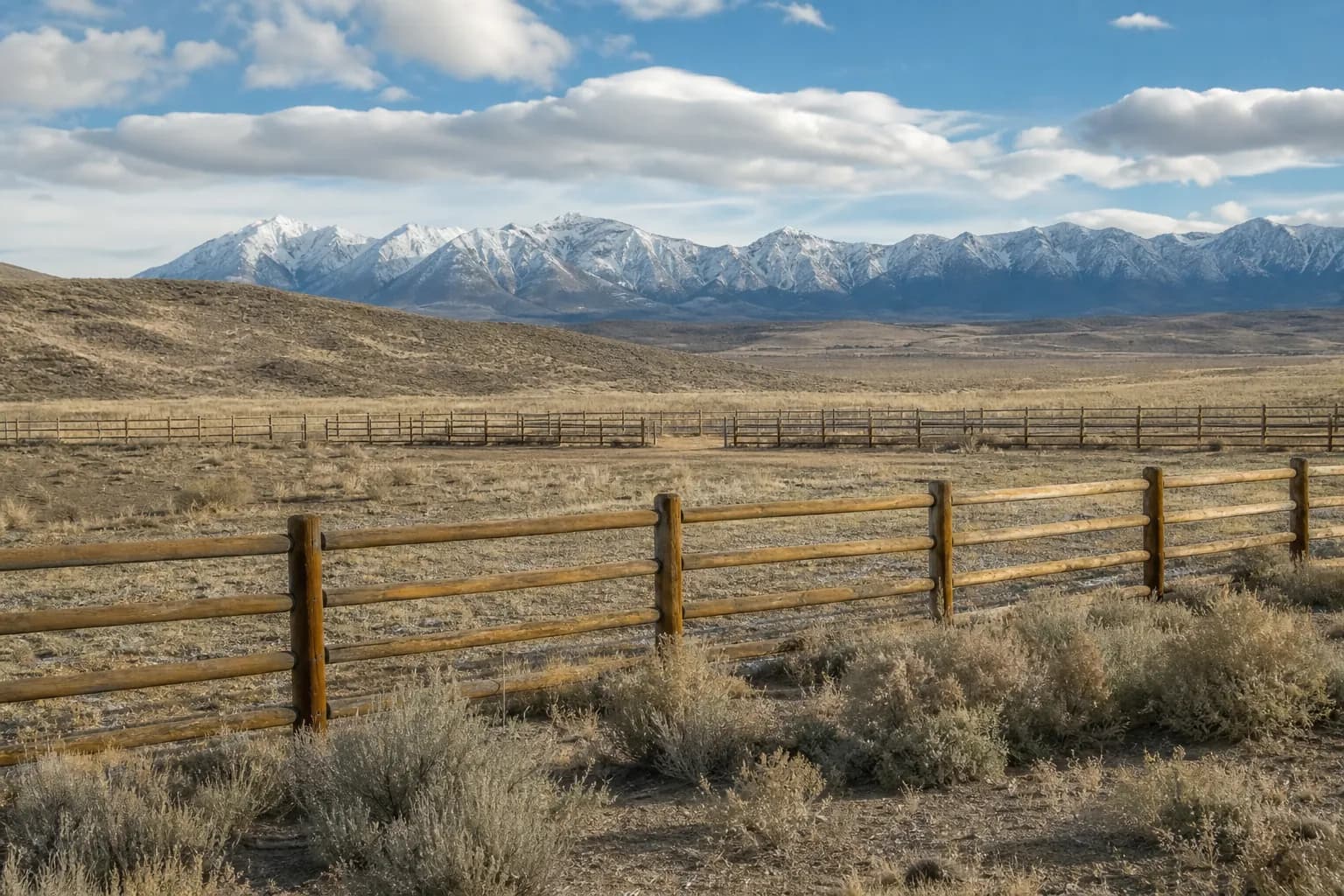
Split rail
Rough-split cedar or pine rails dropped into mortised posts, two or three rails high. No fasteners, quick to build, and it reads as rural. Adding welded wire mesh on the inside turns it into a dog or small-livestock fence.
Ranch rail (post and board)
Sawn boards fastened to the face of posts, painted or left natural, or the vinyl version of the same look. Common along driveways and horse paddocks.
Hog wire
Welded wire panels set in a wood or steel frame. It keeps deer and rabbits out of a vegetable garden and has become a popular modern look for backyards that want openness rather than privacy.
Range fence
T-posts with barbed or smooth wire or field fence for grazing land. Barbed wire is prohibited in Reno's residential zones; Washoe County treats T-bar and wire range fencing on qualifying acreage as permit-exempt.
Permit rules on acreage
Washoe County's fence handout is specific: on a lot of more than one acre, where the development code allows agricultural use, strictly range fencing of T-bar and wire needs no fence permit. Use wood or any other material and a building permit is required. Inside the City of Reno, all fence construction requires a permit, and barbed wire, razor wire and electric fencing are not allowed on residential property.
Water matters on rural lots. Washoe County does not allow fencing within floodways, but in a floodplain it may approve fencing that does not block the flow of water and names split rail as the example. Lots on Brown's, Whites, Galena or Steamboat Creek fall under the county's Significant Hydrologic Resources rules, which call for a meeting with a planner first.
Horses and livestock
Horse fencing should be visible and smooth: ranch rail, vinyl rail or a rail with a strand of electric tape. Barbed wire and loose field fence injure horses. Corners and gates take the strain, so they get braced H-assemblies. Washoe Valley has a long horse history: the 4,000-acre Winters Ranch there raised Thoroughbreds, including the 1889 champion two-year-old El Rio Rey.
What open fences cost
National installed ranges for wooden split rail run about $15–$35 per linear foot: pine $15–$25, cedar $25–$35, and split rail with wire mesh about $35–$40. Long straight runs on flat ground cost less per foot than short runs with many corners and gates. Hard ground and caliche can add digging cost.
Back to the main guide: fence companies in Reno.